
Diffuse Coplanar Surface Barrier Discharge (DCSBD) is an atmospheric-pressure plasma technology that generates a thin, macroscopically uniform layer of high-density plasma in ambient air or reactive gas mixtures, without requiring noble-gas admixtures such as helium or argon.
DCSBD was developed at CEPLANT (Masaryk University) and is designed, manufactured and commercialised by ROPLASS.
DCSBD treats surfaces that corona and plasma-jet systems struggle with — wide webs, reactive-gas processes and noble-gas-free operation — at plasma power densities of approximately 100 W/cm³. Its uniform, thin plasma layer generates in ambient air or in O₂, CO₂, CH₄ and H₂ atmospheres, and delivers durable surface activation compatible with on-line production speeds required by textile, nonwoven and film industries.
- Homogeneity of DCSBD plasma increases with the discharge power density
- The power density of thin diffuse DCSBD plasma layer achieves the order of 100 W/cm3
- The macroscopically uniform plasma with the high power density can be generated in any, even in strongly electron-attaching, reactive gas mixture (oxygen O2, carbon dioxide CO2, methane CH4, hydrogen H2)
- No noble gas admixtures (helium, argon) necessity to create homogeneous plasma with DCSBD technology
- DCSBD plasma is mechanically robust and safe
- DCSBD plasma is capable to meet the on-line production requirements in textile and paper industries, particularly in nonwovens industry
- Excellent durability of DCSBD plasma surface activation
DCSBD technology developed by ROPLASS is focused on both surface treatment and deposition of functional coatings. Our atmospheric plasma technology is able to treat the materials such as semiconductor, polymers, fabrics, wood, paper and others in a safe, environmentally friendly and cost-effective way. What is the DCSBD’s potential to do with treated substrates?

Raise surface energy of polymers, glass and films for better adhesion of aqueous coatings, inks and dyes.

Deposit ultrathin fluorocarbon-like layers for water-repellent surfaces on nonwovens and packaging.

Activate PET, PP and PE film surfaces before flexographic, inkjet or offset printing.

Improve interface strength for lamination, coating and bonding on polymers and metals.

Enable uniform dye uptake on synthetic textiles and nonwovens without chemical priming.

Tailor surface electronic structure and band alignment on TCO and semiconductor layers.
Excellent stability of plasma-treated polymer surfaces by roll-to-roll


The figure shows a curved DCSBD plasma unit operating under ambient air in a roll-to-roll setup with flexible polymer foils and the evolution of the water contact angle of flexible polyamide foil surfaces treated by curved DCSBD and industrial corona and stored for 14 days. Results indicate improved stability of surfaces treated by DCSBD thanks to the effects of diffuse plasma on the polymer surfaces.
Application examples
1. How to activate polymer films — PET, PEN, PP, PE, PTFE and BOPP — for R2R printing, coating and lamination without helium
DCSBD atmospheric plasma activates a broad range of polymer films — PET, PEN, PP, PE, polyamide, polycarbonate, PTFE, BOPP and ionoplast interlayers — for roll-to-roll printing, coating, lamination and adhesive bonding. Treatment is delivered in ambient air or in defined O₂ or N₂ atmospheres at web speeds up to 100 m/min, without the noble-gas consumables required by conventional atmospheric plasma jets.
On chemically stable, hydrophobic polymers where corona treatment either fails or delivers only short-lived wettability — most notably PTFE and PP — DCSBD generates durable functional groups (OH, C=O, COOH) verified by XPS. Continuous large-scale PTFE treatment [Feng et al., Surfaces and Interfaces 78, 2026], inline BOPP activation [Šrámková et al., Polymers 13(23), 2021], polycarbonate coating adhesion [Kelar et al., Polymer Testing 67, 2018] and UV-digital printing on wide polymer substrates [Fleischer et al., Nanomaterials 14(5), 2024] demonstrate industrial-scale viability across packaging, automotive interior, safety-glass and flexible-electronics production lines.
Key industries: Packaging (flexible packaging, tubular film, BOPP labels), automotive (laminated safety-glass interlayers, UV-digital printing adhesion), flexible and printed electronics (PET/ITO conductivity enhancement), technical PTFE processing (ALD pre-treatment, wettability recovery).
2. How to activate nonwovens, cotton and nanofibrous membranes inline — hydrophilization, dyeing, antibacterial finishes
DCSBD atmospheric plasma delivers uniform inline surface functionalisation of nonwovens, cotton fabrics, electrospun nanofibers and fluoropolymer nanofibrous membranes — enabling durable hydrophilization of polypropylene nonwovens at web speeds up to 450 m/min (industrially verified with PEGAS NONWOVENS, Czech Republic), improved dyeability of cotton, and adhesion of antibacterial nanoparticle coatings on medical-grade textiles.
Published evidence: low-cost, high-speed hydrophilic finishing of PP nonwovens [Kováčik et al., Horizons in World Physics 288, 2017], PP-NW pre-treatment for antibacterial PLA nanoparticles [Ivanova et al., Plasma Processes and Polymers 14(10), 2017], cotton fabric cationization for improved dyeability and antibacterial properties using chitosan [Ben Hamida et al., Cellulose 31, 2024], PCL-nanofiber adhesion on plasma-modified PP fabric [Janů et al., Polymers 15(7), 2023], and plasma-immobilised CeO₂ nanoparticles on fluoropolymer nanofibrous membranes for photocatalytic filtration [Kormunda et al., Journal of Applied Polymer Science 140(35), 2023].
Key industries: Hygiene and medical nonwovens (diapers, wipes, wound dressings, filtration), textile finishing (cotton dyeing, functional finishes), membrane filtration (photocatalytic and antimicrobial), advanced ceramics (polymer tape carriers for ceramic slurry casting).

3. How to clean and activate float, soda-lime, FTO and ITO glass before lamination or coating — without solvents or noble gases
DCSBD atmospheric plasma removes organic and carbon nano-contamination from float, soda-lime, borosilicate, FTO and ITO glass surfaces and generates hydrophilic hydroxyl (OH) groups — improving adhesion of paints, coatings, laminated interlayers and transparent conductive oxide (TCO) layers without wet-chemical cleaning steps.
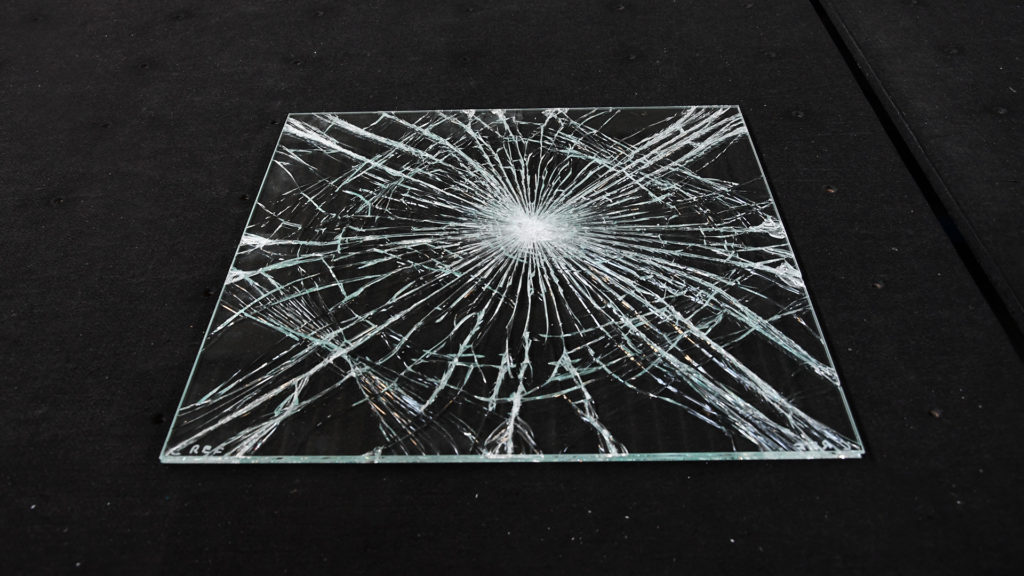
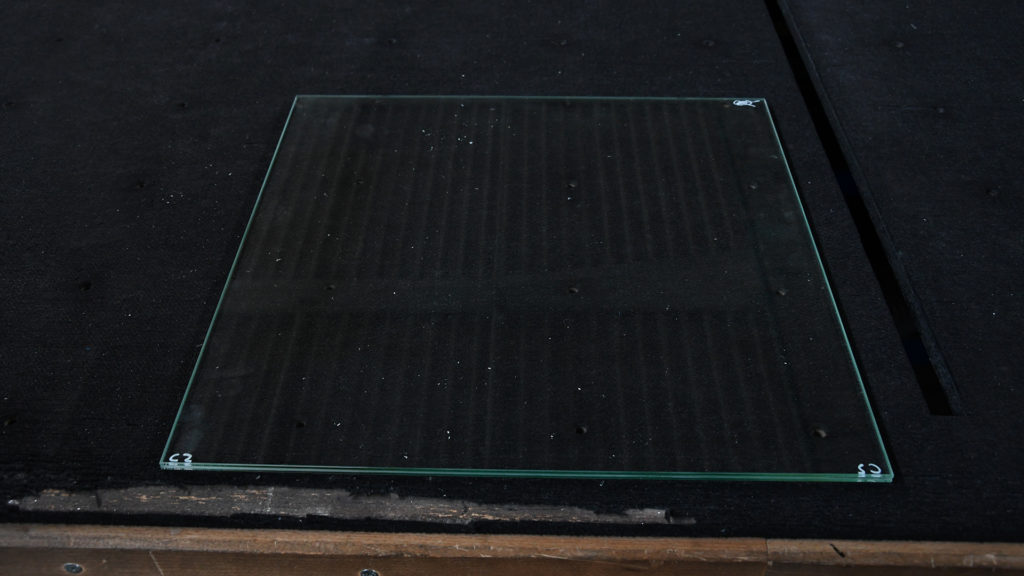
In laminated safety glass, DCSBD-treated interlayers demonstrably improve foil-to-glass adhesion under ball-drop testing, verified in collaboration with POLARTHERM FLACHGLAS and INNOVENT e.V. (Germany) [Homola et al., NANOCON Conf. Proc., 2019]. For photovoltaic FTO glass, rapid plasma cleaning delivers TiO₂ blocking-layer quality equivalent to conventional wet-chemical processes at a fraction of the process time [Hvojnik et al., Materials Science in Semiconductor Processing 131, 2021]. Comparable results are reported on float soda-lime glass [Sihelník et al., Surfaces and Interfaces 40, 2023], for improved glass-bond adhesive strength [Buček et al., International Journal of Adhesion & Adhesives 78, 2017], and — using a linear DCSBD N₂ atmospheric plasma jet — for temperature-sensitive ionoplast interlayers used in advanced laminated glass [Feng et al., Applied Surface Science 727, 2026].
Key industries: Safety and automotive glass (laminated safety glass — ball-drop verified), photovoltaics (FTO / ITO substrate preparation for perovskite and DSSC cells), architectural glass and optics (pre-coating cleaning), advanced ceramics (DBD-activated alumina powder for improved sintered microstructure).
4. How to sinter printed TiO₂, SnO₂ and silver-nanoparticle layers at 70 °C instead of 400 °C
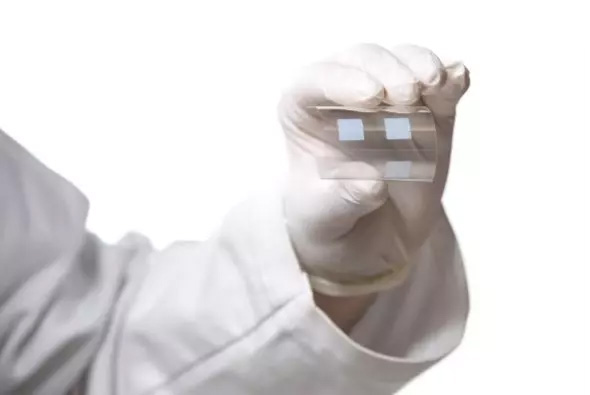
DCSBD atmospheric plasma at 70 °C achieves the same functional consolidation of printed inorganic layers — mesoporous TiO₂ photoanodes, SnO₂ electron-transport layers, silver-nanoparticle interconnects, iron-oxide magnetic layers — as conventional 400 °C furnace sintering, in seconds to minutes rather than hours.
This enables direct fabrication of perovskite and dye-sensitised solar cells on thermally sensitive flexible substrates (PET, PEN) where high-temperature sintering is physically impossible: 70 °C mineralization of inkjet TiO₂ photoanodes [Homola et al., ACS Applied Materials & Interfaces 8(49), 2016; Flexible and Printed Electronics 2(3), 2017], perovskite cells with plasma-processed mesoporous TiO₂ delivering competitive efficiency [Homola et al., ACS Applied Energy Materials 3(12), 2020], rapid low-T colloidal SnO₂ deposition for planar perovskite cells [Shekargoftar et al., Energy Technology 9(5), 2021], and inkjet-printed silver-nanoparticle sintering by N₂ plasma [Vida et al., Applied Physics A 131(2), 2025].
Key industries: Third-generation photovoltaics (perovskite, DSSC, planar and mesoporous architectures), printed and flexible electronics (silver interconnects, printed sensors), magnetic thin-film applications (iron-oxide inkjet-printed layers), functional ceramics (titania-siloxane composite layers).
5. How to reduce, functionalise and tune nanomaterials at atmospheric pressure — graphene oxide, graphitic carbon nitride, MXenes, perovskites
DCSBD and MSDBD atmospheric plasma enable rapid, low-temperature modification of advanced nanomaterials that conventionally require lengthy hydrothermal, vacuum or high-temperature processing.
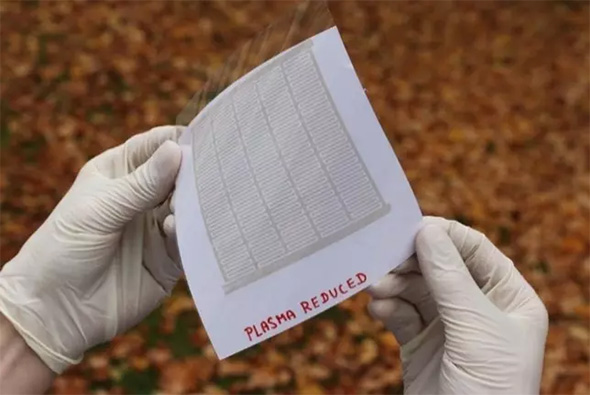
In seconds to minutes and under ambient air or defined gas atmospheres, ROPLASS plasma reduces graphene oxide to conductive graphene by hydrogen plasma [Homola et al., ChemSusChem 11(5), 2018], functionalises graphitic carbon nitride with amide and carboxyl groups for enhanced sulfamethoxazole photocatalysis [Zažímal et al., Journal of Materials Chemistry A 13(19), 2025], tunes the work function of TiO₂/Ti₃C₂Tx MXene composites [Vida et al., Nanoscale 15(3), 2023], and passivates lead halide perovskite films for improved solar-cell performance [Vlk et al., Progress in Photovoltaics, 2026]. Reduction-exfoliation of 3D aerogel-like graphene oxide to conductive rGO sheets [Krumpolec et al., FlatChem 35, 2022] and GO-based sensors of high sensitivity for small organic molecules [Homola et al., Journal of Applied Physics 128(24), 2020] extend the approach to printed sensors and functional coatings.
Key industries: 2D-materials R&D (graphene, MXenes, transition-metal dichalcogenides), printed and flexible sensors (GO-based analyte detection), next-generation photovoltaics (perovskite passivation and defect engineering), photocatalysis and advanced oxidation (gC₃N₄ for wastewater — see linked page).
6. How to stimulate germination, protect against pathogens and improve plant vigour with atmospheric plasma
Short DCSBD and MSDBD atmospheric plasma treatment of seeds — pepper, melon, cucumber, wheat, peanut, pea — enhances germination rate, protects against fungal pathogens, and modifies seed-coating element distribution in ways that interact positively with soil microbiome. The technology operates in humid, dusty industrial conditions in continuous regime.
Published evidence spans amplitude-modulated DBD treatment of pepper and melon seeds [Homola et al., Journal of Applied Physics 129(19), 2021], MSDBD-based physical quality optimisation on peanut [Gebremariam et al., European Physical Journal D 73(5), 2019], seed-coating × soil-microbiome interaction on wheat [Kalachova et al., Journal of Agricultural and Food Chemistry 72(11), 2024], germination and disease reduction on cucumber and pepper [Štěpánová et al., Plasma Processes and Polymers 15(2), 2018], and MSDBD-based reduction of seed-agrochemical dust [Slavíček et al., Plasma Chemistry and Plasma Processing 43, 2023]. The approach extends to aerosol-based nitrogen fixation for plasma-activated water and fertiliser production [Fujera et al., Plasma Sources Science and Technology 33(7), 2024]. Recent scalability and energy-efficiency analysis on pea seeds [Šrámková et al., Innovative Food Science & Emerging Technologies, 2026] and the widely cited review of plasma-assisted agriculture [Šimek & Homola, European Physical Journal D 75(7), 2021 — 66 citations] anchor the field.
Key industries: Seed processing (pre-sowing treatment, coating optimisation), vegetable and cereal agriculture (yield and disease reduction), post-harvest decontamination, plasma-activated water for irrigation and hydroponics, nitrogen fixation for fertiliser production.

Beyond these six clusters, ROPLASS plasma technologies also serve two additional application families with dedicated landing pages:
- Wastewater treatment and environmental catalysis — DCSBD-modified graphitic carbon nitride, MXene composites and biochar sorbents for pharmaceutical, antibiotic and organic pollutant removal from real WWTP effluents, aquaculture streams and drinking water. Backed by 30+ peer-reviewed publications since 2019. → See our Wastewater Treatment page.
- Biodecontamination and biomedical surface treatment — MSDBD-generated ozone- and hydrogen-peroxide-rich atmospheres inactivate bacteria (including antibiotic-resistant strains), biofilms and spores on thermally sensitive medical devices, packaging and biomaterials. DCSBD plasma also enables biomedical polymer coatings (poly(2-oxazoline), non-fouling hydrogels, wound-dressing nanofibers). → See our RPS30+ biodeco product and Biodecontamination page.